

Tasting Notes and Scores
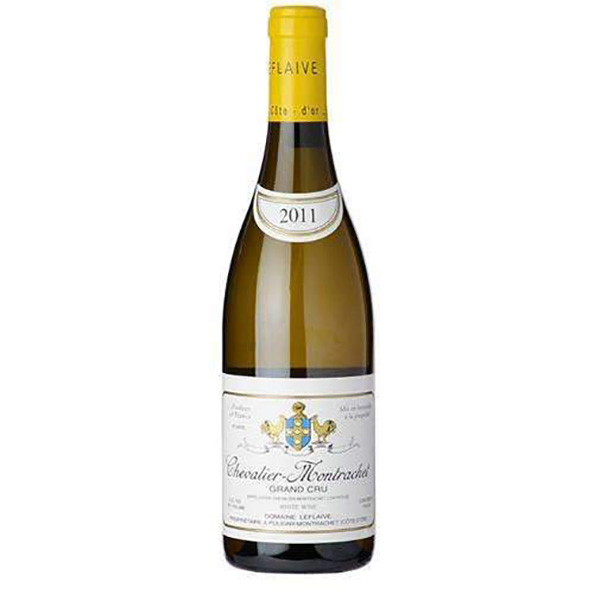
Bright, light yellow. Very rich, explosive aromas of exotic pineapple and honey lifted by pungent calcaire. Extremely rich and concentrated but classically dry and fine-grained, without an ounce of excess weight. A powerful expression of crushed-stone minerality, with its grapefruit and lemon cut accentuating the impression of inner-mouth tension and energy. Finishes extremely long, with a fine dusting of tannins and the strong lemony acidity drawing out the fruit. The pH here is a very low 3.0, according to managing director Brice de la Morandière. Just after the bottling, I described this wine's pineapple and crushed-stone aromas as Riesling-like--at least compared to the estate's Batard-Montrachet. A very strong vintage for this wine, and a spectacular start to the tasting. This Chevalier-Montrachet should be long-lived. (13.05% natural alcohol; the harvest at Domaine Leflaive began on September 14; overall production was reduced by half in 2012, owing to a long, difficult flowering with extensive coulure and millerandage_; at the time, then-winemaker Eric Remy noted that "rot was the only problem that we didn't have in 2012")
Stephen Tanzer
Vinous
2019-09-17
Dense and reserved, Leflaive's 2012 Chevalier-Montrachet Grand Cru unwinds in the glass with aromas of pear, toasted bread, citrus zest, mandarin and crisp peach, framed by a touch of light reduction and new oak. On the palate, the wine is full-bodied, deep and powerful, with tangy acids, prodigious concentration and a penetrating, mouthwatering finish. This is a muscular, tight-knit Chevalier that will need time. The product of a humid spring and yields reduced by mildew and hail, by the numbers the 2012 possesses only 13.05% alcohol with a low pH of 3.0.
William Kelley
Robert Parker
2019-07-31
The 2012 Chevalier-Montrachet Grand Cru has very fine precision on the nose, expanding all the time with mineral notes, then later, dried flowers accompanied by a faint hint of licorice. The palate is very well-balanced and very powerful, much more than the Bienvenue and Batard-Montrachet. This has real density and poise with a long lime-tinged finish. This is a sophisticated wine, erudite and subtle, one not predisposed to flaunt itself in the flush of youth, but likely to repay 8 to 10-years aging. Anne-Claude Leflaive made a brief appearance during my tasting at the domaine since she was hastening off to Italy. I have been visiting here for as long as I can remember, first meeting former winemaker Pierre Morey in the 1990s. Back in those days, the tenets of biodynamism were evident, although back then I did not really understand them. Today, there is almost evangelism towards Steiner’s philosophy, not in a monomaniacal sense, rather a strong belief that Anne-Claude’s wines would be pale shadows without them. Parking outside their gates, it was good to be back after a three-year absence. Nothing much had changed. On this occasion it was Antoine Repetit de la Bigne who escorted me down to the stainless-steel vats where the final blends were resting prior to bottling, which is where I always taste. I wondered whether finally I would hear “Oui” when I ask whether I could taste their single barrel of Montrachet? I decided not to ask. That would be rude. Antoine told me that the harvest began on September 14 and everything was picked by September 21. Of course, I had to bring up the topic of hail damage. Antoine explained that here it was de facto the second hail storm on August 1 that inflicted the most damage, particularly on their parcels of village cru. In the end, Leflaive ended up losing approximately half their crop depending up the vineyard. “Fortunately it was just before veraison so the berries did not have a lot of juice in them,” Antoine informed me, clambering up the ladder to dip his pipette into another vat. “Curiously, even the big berries had little juice. It was important to apply the treatments quickly so that the vines do not become stressed and retard the vegetative cycle. We used nettle and velarian (a source of phosphorous) that were both very effective. Then when it came to sorting, the vibrating table de trie was crucial.” Many of the treatments had to be done on foot, much to the chagrin of the team plodding through the vines in their heavy muddy boots. Usually for the last three years it has been horses hooves in the vineyard. However, in 2012 it was found that two human legs were better than four equine ones. It is always an intellectual as well as satisfying sensory exercise tasting through Anne-Claude Leflaive’s wines. It always serves as a lesson in terroir expression: same grape, same approach. As so often I find, those not wishing to spend too much money ought to head directly from their village cru, their Puligny-Montrachet one of the finest you will find in Cote de Beaune. Beyond that, well each year springs up a different premier cru that catches you off guard. Myself, I was taken with stunning Les Pucelles due to its precocity and intensity that lifted it equal to the grand crus. Others might prefer something subtler. I do not think Anne-Claude wines are beyond criticism. Sometimes the aura that veils the estate and Anne-Claude herself, creates a shield so that they are impermeable to dissenting comments. Biodynamics itself has never precluded an intrinsically superior wine to one where a load of chemical was dumped onto the vineyard. The question is more: if given the choice, which would you prefer to put in your mouth? Antoine hands me a copy of his paperback entitled “What’s so Special About Biodynamic Wine.” I read the chapter on wine critics on the way home. I agree with him that we should strive to taste as much as possible at the domaine, but at the end of the day, a biodynamic wine should not be critiqued with preferential treatment. Whether Anne-Claude Leflaive’s Chevalier-Montrachet is biodynamic or not is irrelevant. I am more interested in its intrinsic qualities vis-a-vis their Les Pucelles or Bienvenue, vis-a-vis the Chevalier-Montrachet from Alain Chavy, Jean Chartron, Etienne Sauzet or Michel Niellon. And the Chevalier-Montrachet here is a sublime expression of the vineyard no doubt destined to age with grace and style. That is what matters. You may have noticed there is no Montrachet note here. The reason is not personal. Just that there is so little that it is being matured in a specially made small barrel, which renders the elevage extremely sensitive and fragile (see Frederic Barnier’s comments about his Criots-Batard-Montrachet.) I would not want to ruin what little there is for the sake of vanity. Importer: Wilson-Daniels, St. Helena, CA; tel. (707) 963-9661
Neal Martin
Wine Advocate
2013-12-30
Extraordinary charm on the nose! Already! Sprightly and lively with lots of lift and fruit. Very much less dense than the Bâtard but with real class. Underneath there is weight but on top it is all come-hither appeal. Crackling finish. (JR)
Jancis Robinson
Jancis Robinson
2013-12-02
Burgundy
View 3 pack case(s) available.
Burgundy
View 6/12 pack case(s) available.
Burgundy
View 6 pack case(s) available.
Burgundy
View 6 pack case(s) available.

Pricing includes duty and VAT.
Want To
get In TouchPlease contact the LiveTrade team today for more information or to book a demo.
Contact us