
Tasting Notes and Scores
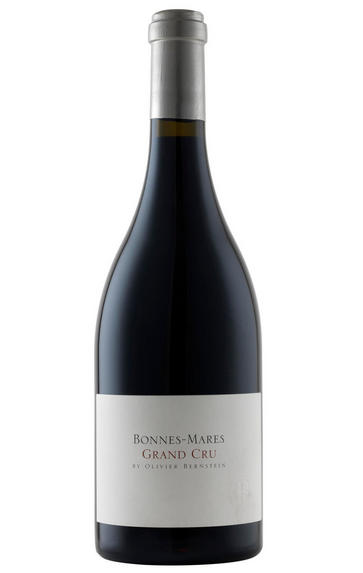
The 2012 Bonnes-Mares is one of the most reticent wines among the Grand Crus. Here it is the wine's inner tension and pure sense of energy that stand out most. Violets, crushed rocks, graphite and plums are all layered into the powerful, imposing finish. The 2012 was fermented with 80% whole clusters, and it still needs time to fully come together. Still, from time to time glimpses of brilliance come through, suggesting what lies ahead.
Antonio Galloni
Vinous
2014-01-01
(this wine was vinified with 80% whole clusters, vs. 50% for the rest of these 2012s): Good deep, bright red. Ineffable, soil-driven aromas of red cherry, pepper and wild herbs. Silky on entry, then chewy with extract in the middle, with bracing acidity intensifying the pure, lightly saline flavors of crushed dark berries, sour cherry and pomegranate. Finishes with outstanding primary berry persistence and rich tannins that reach the front teeth. Remarkably, there's hardly a trace of reduction here.
Stephen Tanzer
Vinous
2014-01-01
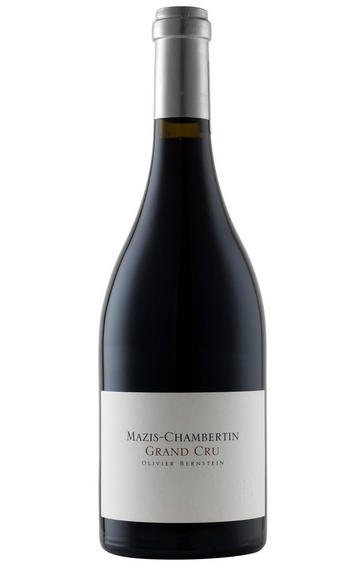
The 2012 Bonnes-Mares Grand Cru includes 80% whole cluster fruit this year and comes from vines adjacent to those belonging to Lalou Bize-Leroy. The nose is very composed, perhaps less raucous than Bonnes Mares can be, with neatly placed red berries, cold stone and distant marine scents. The terroir shows through clearly here. The palate is medium-bodied with good body and depth. This is quite a serious Bonnes-Mares, reminiscent of Frederic Mugnier’s in some way, underpinned by firm tannins and a linear, focused finish. This is a grand cru with sophistication and breeding, perchance a “bookish” Bonnes-Mares! The 0.18-hectare parcel of Mazis-Chambertin that was under fermage was finally purchased by Olivier Bernstein last year – a propitious parcel of octogenarian vines. I remember receiving an invitation to taste the wines of Olivier Bernstein several years ago in London. “Olivier Bernstein?” I thought to myself. “Never ‘eard of ‘im. Sounds more like a grower from Alsace.” It was actually Olivier’s maiden vintage and I soon learned that the Touraine-born winemaker came from a famous music publishing family had caught the wine bug that led to him studying oenology in Dijon that led to him establishing a winery in Roussillon in 2002, a year during which he did a brief stage with Henri Jayer. Maison Olivier Bernstein arrived five years later. The wines were not cheap, and perhaps there was a bit of hubris given that absence of a track record, although as the my cached notes on his 2007s testify, they wines made a positive impressive: sleek, very pure, polished and crafted – seductive wines where clearly a great deal of effort had been gone into their craftsmanship, wines that knew they had to impress critics like myself, as well as Burgundy lovers who needed an explanation exactly why they should hedge their bets on a relative unknown given the plethora of alternatives. For one reason or another, I did not revisit the wines until I walked from my hotel to Olivier’s winery near the center of the town, ensconced not in some “out-of-town” warehouse facility, but nestled in Beaune’s cobbled streets alongside stalwarts such as Joseph Drouhin, Albert Bichot and Bouchard Pere & Fils. Olivier himself was as convivial as I remembered him: round beaming face, loquacious as ever, eager to discuss his wines and given his spanking new winery, clearly not short of a bob or two. Yet he seems conscientious that brashness and arrogance go down poorly in this tightly knit community that does not do self-aggrandizement. Burgundy has never been a region where you can just barge in with premium price tags. You have to prove yourself against the most demanding cognoscenti in the world. And with this backdrop in mind, I have to say that for the most part these wines do deliver. The danger was that I would find the wines over-eager to impress, resorting to excessive ripeness, extraction and toasty new oak. But I found that not to be the case. Partly because Olivier and his cellar master (incidentally, the nephew of Bernard Dugat of Domaine Dugat-Py) has the nous to hone in upon parcels of old vines, something that is becoming increasingly difficult as demand has increased. “We have selected only very old vines between 60 to 80 years old, with the exception of the Chambolle-Musigny Les Lavrottes, which is just under Bonnes-Mares,” Olivier explained. “They produce naturally small yields. All the fruit is out-sourced from contracted growers, but we do the vineyard husbandry as if we were the owners. I like to have 5 or 6 barrels of wine at least not just 1 or 2 to be viable. In 2012 we used 50% whole cluster, but when we started in 2007, we did not use any as I was discovering the vineyards.” And Olivier has taken the next logical step in purchasing his first vineyards in Mazis-Chambertin and Gevrey Les Champeaux. Olivier’s wines are well worth a look – the quality is definitely tangible in these svelte and charming wines. No, not every cru is without fault and with such panache, what I would like to see is a little more of that great intangible?soul. But that is seeping through with these 2012s. Importer: currently through Becky Wassermann (www.leserbet.com) and Olivier is on the cusp of launching his wines through Wilson Daniels in the USA. Also available through Berry Brothers & Rudd (UK)
Neal Martin
Wine Advocate
2013-12-30
Burgundy
View 6 pack case(s) available.
Burgundy
View 6 pack case(s) available.
Burgundy
View 6 pack case(s) available.
Burgundy
View 6 pack case(s) available.

Pricing includes duty and VAT.
Want To
get In TouchPlease contact the LiveTrade team today for more information or to book a demo.
Contact us