

Tasting Notes and Scores
With a production of 432 cases, the 2010 St.-Joseph Les Granits Blanc may be the finest white wine made in the appellation. Aromas of tangerine oil, orange marmalade, powdered stones and subtle gun flint as well as smoke jump from the glass of this full-bodied effort. This elegant, rich, full, stunning wine is a tour de force as well as a big-time reference point for what can be achieved from the granite hillsides of St.-Joseph. In November of this year, Michel Chapoutier finally made the cover of The Wine Spectator. The accompanying article said essentially the same things I had written about over twenty years ago. More importantly, I am thrilled that Chapoutier received this attention because it has long been deserved. History will record that Michel Chapoutier is a revolutionary. He is also a highly emotional man whose infectious love of primitive art, historic books, classical music and, of course, terroir and winemaking are seemingly impossible to harness. Michel Chapoutier was among the first in France to embrace the radical biodynamic agricultural teachings, for which he was initially criticized, but is now praised. He was also the first to print all his labels in Braille, something that cynics considered to be a gimmick, but ask the National Association for the Blind what they think. Coming from a famous family, but moving in a direction unlike any of its previous members, Michel Chapoutier is self-taught. What he has accomplished over the last two decades or more is one of the great wine stories of the modern era. With all his outgoing, boisterous, machine-gun-speed prose that can sometimes sound shockingly cocky, and at other times reminiscent of the famous Lebanese poet Khalil Gibran, there is never a dull moment around Chapoutier., who makes comments such as “Filtering wine is like making love with a condom,” and “Acidifying wine is like putting a suit of armor on the vineyard’s terroir, vintage character and the cepage.” Don’t blame him if his brilliant intellect and shocking vocabulary put his visitors on the defensive. Michel Chapoutier has proven through his genius, the faith of his convictions and backbreaking attention to detail in his vineyards and in the winery that a once moribund negociant (yet with significant vineyard holdings) could become a beacon of inspiration and quality for the entire world. In short, every wine consumer in the world should admire his accomplishments. All of Chapoutier’s lower level 2010 whites and basic reds have long been sold out, so to keep the tasting somewhat limited during my visit, we focused on the more recently released 2010 white and red selections parcellaires and nearly all the 2011s. As for the 2010 selection parcellaire whites, they are spectacular. Le Pavillon, once called Rochefine and owned by Jaboulet-Verchere, consists of 10 acres of pure granite in the famed Les Bessards, which is considered by many to be the single greatest terroir of Hermitage. The Ermitage Le Pavillon, which is meant to age for 50+ years, is Michel Chapoutier’s legacy, and he is confident that history will support his belief in this extraordinary wine. Michel Chapoutier is not alone in believing the 2011s may resemble a more modern day version of 1991. That vintage was largely underrated by just about everybody (except yours truly) because all the accolades and hyperbole were largely bestowed on both 1989 and 1990 (deservedly), but in the Northern Rhone 1991 turned out to be a strikingly superb vintage for Cote Rotie, Hermitage, Cornas and Condrieu. In the Southern Rhone, the vintage was largely a disaster. Following is an overview of what to expect with the inexpensive 2011 whites and reds. Most of these wines do not have the weight, power or tannic structure of the 2010s, but they are by no means diluted or wimpish wines. They tend to be charming, fruit-forward and seductive, and thus may be preferred by consumers looking for immediate gratification. Although the first few wines reviewed are Southern Rhones, they need to be covered because they are in bottle, and I did not review them in issue 203. Along with several other producers, Michel Chapoutier has helped increase the world’s attention to the long-forgotten, microscopic appellation of St.-Peray. Chapoutier produces a bevy of St.-Perays under his own name as well as in partnership with two three-star chefs, Sophie Pic, of the Restaurant Pic in Valence (as well as several culinary branches in Paris and Lausanne, Switzerland), and Yannick Alleno, the brilliant chef at the Hotel Le Meurice’s in Paris. The red 2011 selections parcellaires are already fruit-forward and seductive. Readers should love them as they are much more evolved than the more structured, powerful, dense, tannic 2010s. Importer: Terlato Wines International, Lake Bluff, IL; tel. (847) 604-8900
Robert M. Parker, Jr.
Wine Advocate
2012-12-27
Robert Parker's Wine Advocate 23/12/2011 A potential sleeper selection in every great year for Chapoutier, the single-vineyard selection 2010 St.-Joseph Les Granits Blanc comes from the granite hillsides of this appellation, not far from the one-horse village of Mauves. Dense, concentrated quince, nectarine and honeysuckle jump from the glass of this full-bodied wine, which has zesty acidity, stunning purity and a long finish. Drink it over the next 10-12 years. (Not yet released) As I have written many times, all of these wines are produced from rigidly cultivated, bio-dynamically managed vineyards. That has been the rule since Michel Chapoutier first took over this firm in the late 1980s. Now, with over 20 years of biodynamic viticulture under his belt, Chapoutier remains committed to this rather radical style of organic farming. He believes the effect is to reduce rot in damp, rainy vintages. Moreover, he has observed that after 10 to 15 years of biodynamic farming, the natural acids tend to be more vivid and the overall pH of the soils (as well as the wines) has dropped. Controversial, outspoken and brutally candid, Chapoutier, who suffers no fools, continues to admirably produce wines that are among the finest in the world and potentially the longest lived. Refusing to acidify, chaptalize, or touch the wines in any way, he clearly wants every wine to capture the very essence of its terroir and vintage personality. In this, he succeeds remarkably. No one has made more effort in resurrecting the once-forgotten backwater appellation of St.-Peray than Michel Chapoutier. Working in conjunction with the famed Michelin three-star restaurant family, the Pics, Chapoutier has produced a sensational 2010 Gamme Pic and Chapoutier St.-Peray, and the first single-vineyard St.-Peray, the 2010 Lieu-Dit Peyrolles St.-Peray, which is one of the greatest St.-Perays I have ever tasted. This appellation is all steep hillside vineyards planted in pure, decomposed granite soils, not dissimilar from Hermitage, but they are located on the other side of the Rhone, facing the city of Valence. The single-vineyard wines, or selections parcellaires, 2010 whites are absolutely amazing, with production levels ranging from 300 to 700 or 800 cases of each cuvee. These wines are for true connoisseurs, as they are expensive and meant for long, long evolutions, but they capture the essence of a vintage and terroir as well as any wines in the world. As for the selections parcellaires of 2010 reds, Chapoutier likes this vintage almost as much as 2009, but feels it is very different, emphasizing more acidity and minerality, whereas 2009 is a combination of pure power, concentration and great potential longevity. Michel Chapoutier considers the 2009s, which are all in bottle, to be among the greatest wines he has ever produced, equaling his finest wines of 2006, 2003, 1999, 1990 and 1989 (his debut year).
Wine Advocate

Rhone
View 6 pack case(s) available.
Rhone
View 3/6 pack case(s) available.
Rhone
View 6 pack case(s) available.
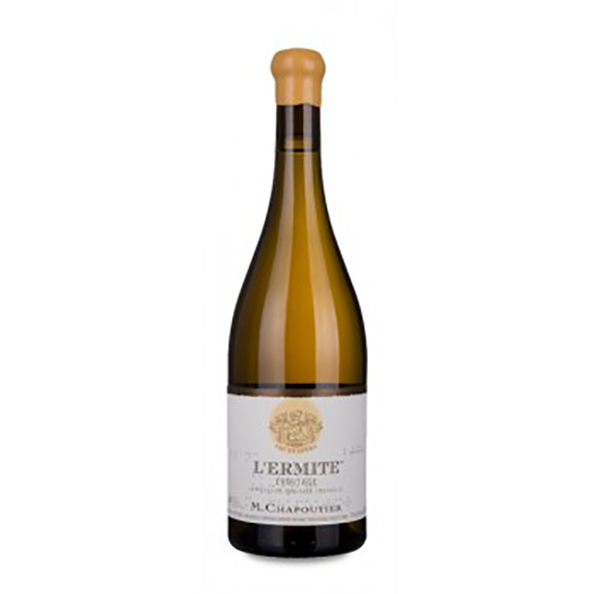
Rhone
View 6 pack case(s) available.

Pricing includes duty and VAT.
Want To
get In TouchPlease contact the LiveTrade team today for more information or to book a demo.
Contact us