
Tasting Notes and Scores
From Peleat: A real fruit bomb, with sexy aromas of red berries, cherry and cassis. Lithe and precise on the palate, with tangy mineral lift and very good cut. From Beaume: Exotic, intensely floral aromas of violet, lavender and magnolia. Sweet red fruits and spices on the palate, with the floral quality repeating. Again from Beaume: Spicy and mineral-driven, with sappy red berry flavors and gentle tannins. Less wild than the previous barrel. From L'Hermite: Musky cherry and dark berry aromas are complicated by minerals and underbrush. Fleshy dark berry and cherry pit flavors cling nicely to the palate. From Meal: A very rich sample, offering powerful cherry and cassis scents and a suavely smoky mineral note. Sappy and broad on the palate, displaying sweet kirsch and smoked meat qualities. From Bessards: Deep, strongly perfumed bouquet evokes cherry, cassis, cured meat and licorice. Firm and chewy, with deep dark berry flavors and slow-building tannins. "This will provide the spine of the final wine," Chave told me. Again from Bessards: Hypnotic aromas of raspberry, candied cherry and incense, with a fresh lashing of minerals. Brisk and focused, with wonderfully pure red fruit flavors and silky texture. Impossibly pure and long on the finish. The final wine will be a riot of red and darker berry fruits, with excellent freshness and clarity.
Josh Raynolds
Vinous
2009-01-01
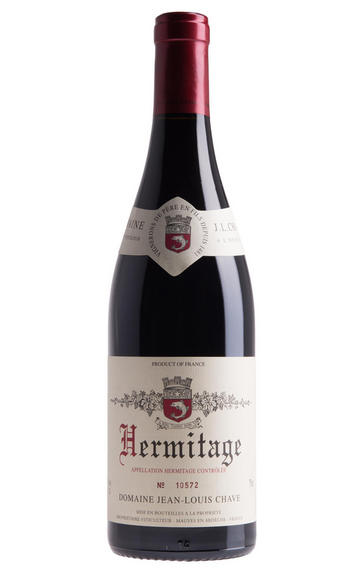
The spectacular 2007 Hermitage boasts a dense purple color along with notes of creme de cassis, loamy soil, crushed rocks and acacia flowers, a rare opulence and a full-bodied style. Reminiscent of the 1991 Hermitage (a great vintage for Chave as well as most top producers in Hermitage), it should drink well for 20-25 years. Tasting through the different Hermitage vineyards (including Peleat, Les Beaumes, Meal, l’Ermite and Les Bessards), the lowest score any of these lots received was 94-96 (Les Beaumes). The other parcels all merited 97-100 points. The most dominant component part of Chave’s red Hermitage comes from Les Bessards, which many consider to be the greatest vineyard on Hermitage Hill. The next largest is Meal, a vineyard with a more southerly exposure. While Chave has not made their special cuvee, Cuvee Cathelin, since 2003, I suspect one will emerge from the different lots of Les Bessards that I tasted as 2009 is certainly a year where enough wine can be culled out for the Cathelin without sacrificing the monumental quality of the regular Hermitage. This looks to be one of the wines of the vintage, which is not surprising given the fact that the Chave family has more experience than just about anybody in the winemaking world (the domaine was founded in 1481 - nearly a decade before Christopher Columbus discovered America!). Importer: David Shiverick, Los Angeles, CA; tel (213) 483-5900
Robert M. Parker, Jr.
Wine Advocate
2011-02-28
The spectacular 2007 Hermitage boasts a dense purple color along with notes of creme de cassis, loamy soil, crushed rocks and acacia flowers, a rare opulence and a full-bodied style. Reminiscent of the 1991 Hermitage (a great vintage for Chave as well as most top producers in Hermitage), it should drink well for 20-25 years. Drink 2011-2036.
95 points – Robert Parker (Wine Advocate #193, Feb 2011)
Wine Advocate
Open and complex, showing spice and granitic notes, the 2007 Hermitage is medium to full-bodied, ripe, and layered, with supple tannins. Beautifully balanced and just so charming, it's drinking at point today but will clearly evolve for another 15+ years, with a gradual decline thereafter. Drink 2025-2040. This iconic estate continues to set the standard for both red and white Hermitage, and few tasting experiences compare to time spent with Jean-Louis Chave in the family's cellars in Mauves. Founded in 1481 and passed down through generations, the domaine farms 14.5 hectares on the Hermitage hill, including parcels in Bessards, L'Ermite, Le Méal, Beaume, and Péléat. All the Hermitage parcels are vinified separately using a mix of stainless steel tanks and oak uprights, with élevage in barrel (20-30% new), and the final blend is assembled before bottling. The Hermitage Blanc comes from Rocoules, Les Murets, and l'Ermite, and is based largely on Marsanne from 60- to 100-year-old vines. It sees full malolactic fermentation and is aged on lees in barrel. In addition to the flagship Hermitage, Chave occasionally releases a special Cuvée Cathelin, sourced primarily from Bessards and aged slightly longer in oak. It's only produced in top vintages and in tiny quantities, and good luck finding any! The domaine also produces a rare Hermitage Vin de Paille, made from Marsanne dried on straw mats and aged several years before release. I've only seen this bottling at the estate, but it's a heavenly dessert wine if there ever was one. In Saint Joseph, Chave has now spent over a decade reviving historic hillside vineyards. The estate Saint Joseph comes from granitic sites near Mauves and Tournon, while the Clos Florentin is a single parcel on sandier, south-facing soils. Both are destemmed and aged in oak but show different profiles - the former more classic and mineral-driven, the latter rounder and more elegant. A new cellar was completed in 2014, but the style here remains deeply rooted in tradition. These are benchmark Northern Rhône wines, built for aging and made with clarity, purpose, and precision. It would probably be impossible to have too much Chave in a cellar.
Jeb Dunnuck
Jeb Dunnuck
2025-05-09

Rhone
View 2 pack case(s) available.
Rhone
View loose bottle(s) and 12 pack case(s) available.
Rhone
View 6/12 pack case(s) available.
Rhone
View 6 pack case(s) available.

Pricing includes duty and VAT.
Want To
get In TouchPlease contact the LiveTrade team today for more information or to book a demo.
Contact us