

Tasting Notes and Scores
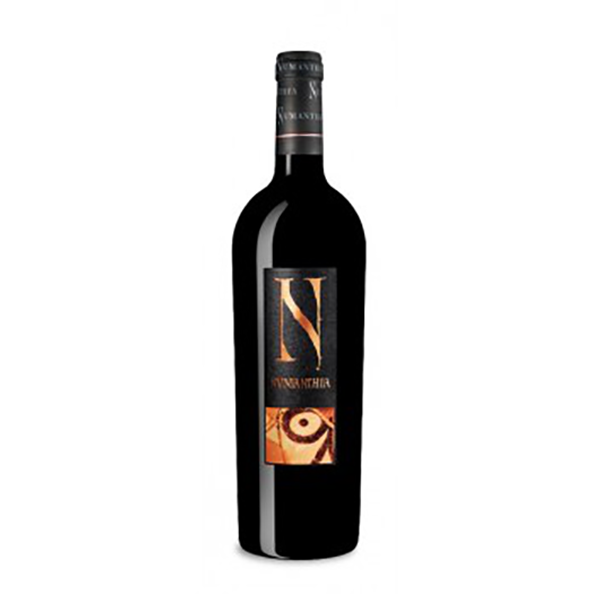
The 2010 Termanthia is broody and introspective on the nose, the aromatics almost cowering following the 2009. The palate is full-bodied and robust with good weight. This is perhaps the most powerful Termanthia that I have encountered with waves of ripe dark cherries, cassis and blueberry washing over the palate, fanning out towards a dense, peppermint-tinged finish. This is a lovely wine, although to be frank, I actually find more soul in the Numanthia. Tell me, did you automatically skip directly here before perusing the rest of this report? Naughty you. But it would not surprise me, since it was this address that brought Toro global attention, and so a visit to Numanthia Termes was a priority. I only need adumbrate the history of the estate. Named after an ancient Spanish city said to have resisted Roman invasion for 20 years, Numanthia was founded by the Eguren family in 1998 in Valdefinjas. Its wines enjoyed overnight critical acclaim, including in this very publication, and it was the catalyst for other winemakers to exploit Toro and recreate their success. The source of quality was derived from an exceptional parcel that included 120-year-old un-grafted vines that had resisted phylloxera with the resilience of those ancient Spanish soldiers. A new winery was constructed in 2007, but in February 2008 it was announced that the estate had been sold to LVMH. Winemaker Marcos Eguren agreed to stay on for two more vintages before he moved on to establish his own winery close by (see “Teso la Monja”). Taking the winemaking reins, Manuel Lazueda has overseen recent vintages, and he kindly not only showed recent releases from Numanthia, but conducted a complete vertical of Termanthia from the maiden vintage. Naturally, there has been speculation how I would find these wines, which come cloaked in 200% new oak. You would presume they are an anathema to what I believe constitutes a great wine. You have to trust me when I say that I tasted without prejudice and without being influenced by previous scores or remarks. There is no question that Lazueda is a talented, perspicacious and passionate winemaker and is overseeing what LVMH themselves describe as a “luxury brand,” according to their website, one said to be purchased for a cool $25 million. That ineluctably creates expectation from every quarter – consumers, investors, collectors, shareholders and yes, critics. I admired both vintages of Numanthia – a statement that might surprise those who incorrectly assume that my so-called “classical” palate does not appreciate modern styles of winemaking. Furthermore, I believe that it offers great value for money considering the cache of the name. Now for a vertical of Termanthia from the debut vintage, and perhaps here we begin courting controversy. In a nutshell, tasting through every vintage from the maiden 2000, I was rather underwhelmed by the first few vintages but found more to admire in later releases. I asked Lazueda what changes he felt there have been over the years. He replied that since 2004, though tannins have increased, they have become smoother, and in a vintage such as 2009, he waited one or two more days to obtain sweeter tannins. Of course, we had a long discussion on the oak regime of 200% new Taransaud oak. When pressed, he told me that they have trialed batches at 100% new oak, but that for now they will continue the present modus operandi. He proposed that despite the level of new oak, that it does not impinge upon the personality of the wine. We will have to agree to disagree on that point. When I enquired why they used particular cooperages, he explained what each imparted, at which point I highlighted the contradiction that the oak did not alter the character of Termanthia. It does. It has to. Given that the subject is a precious parcel of ancient Tinto de Toro vines, would terroir be expressed with greater clarity with less dependence upon new oak? Or should we consider 200% new oak to be an intrinsic part of its terroir? Your answer to those questions will dictate your appreciation of Termanthia, at least from a philosophical standpoint. Consider Pablo Alvarez’s comments as to the reason why he does not mature Pintia for over 12 months. However, what I would say is that I admired these wines far more that I suspect many would predict. Doubtless those whose interest does not extend beyond scores will interpret my scores as an unforgivable attack on one of Toro’s icons, a criminal downgrading. The truth is, I consider Termanthia to be one of the region’s finest wines, even if my criteria for what constitutes a “perfect” wine might be more stringent than others. I consider it to be one of the top two or three Toro wines alongside Alabaster from Teso la Monja, Pintia and the San Roman from Bodegas Maurodos. However, perhaps with reconsideration of the oak regi, it could well become the greatest, but that is their decision to make and not mine. I merely express an opinion, but one that I feel is not mine alone. Importer: LVMH; www.lvmh.com
Neal Martin
Wine Advocate
2013-04-25
Tinta de Toro. 21 months’ oak ageing. Production limited to 6,000 bottles. Great nose intensity, minty, cacao, ripe black fruits. It is a little confected but impressive. Very intense palate with a great texture, tannins are intense but perfectly velvet and they respect the fruit better than previous vintages. The imposing style of previous vintages has changed to a more classy style, however the wine is still very charged with savoury black fruit. Great potential ahead. (FC)
Ferran Centelles
Jancis Robinson
2014-10-22
Ungrafted vines over 120 years old. Hand destemmed, rigorous sorting at the winery. Fermented in 10-hl/20-hl French oak vats. Extended maceration post-fermentation for 16 days. Malolactic in 100% new French barrels before ageing 20 months in new French barriques. Bottled July 2012. Deep in colour but some signs of development, with oak notes dominating on the nose. Confited dark fruit, warming, baked, with a cooling spice edge. Full, fleshy, soft palate, impressive in weight but I would struggle to drink many glasses of this. (AWH)
Andy Howard MW
Jancis Robinson
2022-09-21
Castilla y Leon
View loose bottle(s) available.
Castilla y Leon
View 6 pack case(s) available.
Castilla y Leon
View 6 pack case(s) available.
Castilla y Leon
View 6 pack case(s) available.

Pricing includes duty and VAT.
Want To
get In TouchPlease contact the LiveTrade team today for more information or to book a demo.
Contact us