

Tasting Notes and Scores
The 2010 Dom Ruinart is starting to open up nicely. There's still plenty of the intense, chalky minerality and energy the wine showed last year, but also a bit more mid-palate richness to balance things out. Lemon confit, marzipan, white flowers, slate and white pepper are some of the many aromas and flavors that take shape in the glass. As good as the 2010 is today, I imagine it will be even better in another few years' time. As I have written previously, the 2010 Dom Ruinart is one of the most impressive Champagnes ever made here. If there is anything better, I don't think I have tasted it! March 2023
Antonio Galloni
Overall 2010 was not a great year in Champagne, but it was for some Chardonnays, as this brilliant Dom Ruinart showcases. At Ruinart, the speciality is closing with natural cork for lees ageing, but this is the first time for Dom Ruinart in the recent era. It has resulted in fabulous ageing with stunning reductive toasty layers. The sweet coffee-and-cream nose has yeasty complexities melanging with soft, spicy tones like coconut and vanilla. The fruitiness is as pristine as it gets. Lemon curd, lime zest, orange blossom... Beautifully reductive in the aroma profile, almost like having the magnum effect in a 75cl bottle! So fine and delicious on the silky-smooth and seemingly feather-light palate. This wine shows that Chardonnay really had what it takes in that difficult year. A stunning wine that is blooming already but comes with such cool refinement and tightness that longevity is easy to predict. Disgorged 11/20; dosage 6g/l
Essi Avellan
This is the first vintage of this cuvée that the house has opted to age under cork instead of crown capsule for the aging on the lees, sur latte. It pours a vibrant straw/green hue, and comes from five villages: Sillery, Avize, Cramant, Chouily, and Mesnil-sur-Oger. The 2010 Champagne Dom Ruinart Blanc De Blancs Extra Brut was raised, as it always is, without the use of oak, and saw 3 grams per liter of dosage. Highly expressive on opening, it’s layered with aromas of fresh baked croissant, key lime, melon, and honeysuckle. Rounded and long on the palate, it’s elegant and refined within its medium frame and takes on a remarkable silky chalk texture. Floral all the way through the finish, with long-lasting notes of lemon curd, it retains a springy freshness that is true to the house style but is quite elevated and impeccably well-balanced with layered depth. This would be a great addition to the cellar. Drink 2025-2045. Disgorged in June of 2022.
Audrey Frick
Jeb Dunnuck
2023-11-17
Delicate nutty expressions of blanched almonds and warm biscuits on the nose, accompanied by notes of lemon oil, spring flowers, pastry, pear and exotic fruit. A hint of reduction in the form of a smoky element, attributable to the fact that the cellar ageing of this Champagne was carried out under cork rather than with the usual crown cap. On the palate, this Champagne is medium- to full-bodied and well balanced, with good textural vinosity, but there is also delicacy thanks to its pinpoint mousse. There is a mouthwatering touch of bitterness on the long, resonating finish. This is a Champagne with real ageing potential that has both the powerful character and elegance of a Burgundy grand cru wine. 100% Chardonnay sourced from Le Mesnil-sur-Oger, Avize, Chouilly and Cramant (90%) and 10% from Sillery, situated in the northeast of the Montagne de Reims sector. Dosage: 4g/l. Yohan Castaing. June 2022.
Decanter
The first vintage since the 1960s to see tirage under natural cork in lieu of crown caps, the 2010 Dom Ruinart Blanc de Blancs was disgorged in November 2021. It's showing nicely, over-performing for the vintage, displaying aromas of yellow orchard fruit, toasted nuts, spices, smoke, dried white flowers and iodine. Medium to full-bodied, pillowy and layered, with impressive concentration and chalky structure, it concludes with a long, saline finish.
William Kelley
Robert Parker
2022-08-31
Here, Fred has deviated from the classic Dom Ruinart style a bit. The main difference is that the wine is stored with natural cork instead of under a cap. It produces richer and more concentrated wines, partly because cork is actually oak and that it in itself gives a feeling of oak barrels. Rich burgundy style perfect to exchange for a nice Meursault for nice fish dish. Maybe not as crystal clear and coffee roasted as usual but extremely dense for being a 2010. March 2023.
Richard Juhlin
The first vintage of Dom Ruinart to have been aged under natural cork rather than crown cap. 2010 was a cooler and wetter summer than 2009 – 'almost like a traditional year', according to chef de cave Frédéric Panaïotis, adding that this was ‘not a bad thing to have’. They started picking on 14 September but then the rains got worse so only 10% Montagne de Reims (Sillery) Chardonnay was included in 2010 so 90% is composed of the top grands crus of the Côte des Blancs. 10.4% potential alcohol (average 9.9%). Hand-disgorged in November 2020 with a dosage of 4 g/l. Really deep flavoured. Very obviously more depth of flavour and tension than the 2009 Dom Ruinart. The cork ageing does seem to enhance the savoury, reduced character reminiscent of white burgundy. Very long with lemon notes. A truly exciting wine that is still extremely youthful. (JR)
Jancis Robinson
Jancis Robinson
2022-05-13

Champagne
View loose bottle(s) available.
Champagne
View loose bottle(s) available.
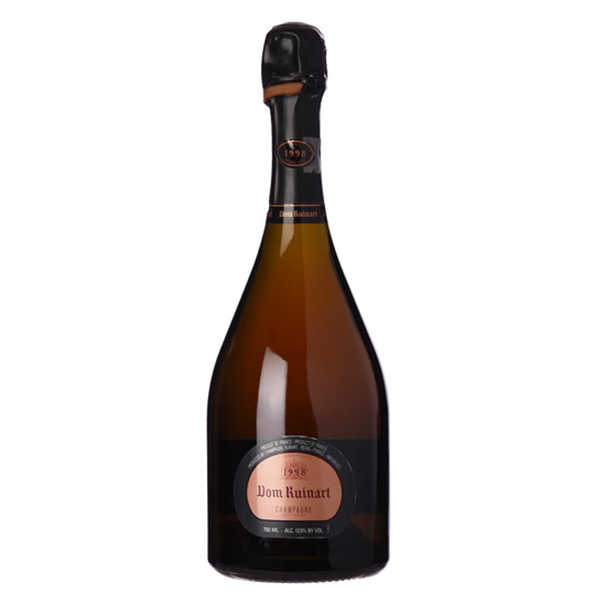
Champagne
View loose bottle(s) available.

Champagne
View 3/6 pack case(s) available.

Pricing includes duty and VAT.
Want To
get In TouchPlease contact the LiveTrade team today for more information or to book a demo.
Contact us