
Producer Guide: Haut Brion
Bordeaux Index
13 October 2025
Steeped in history and defined by excellence, Château Haut-Brion embodies the very essence of Bordeaux. The oldest of the First Growths, Château Haut-Brion has delivered world-class wine not just for decades, but for centuries.
It can transport the drinker to new heights with its textural magic and freshness – and in the most evocative years, it is a wine that can do all the above and live for an unimaginably long time.
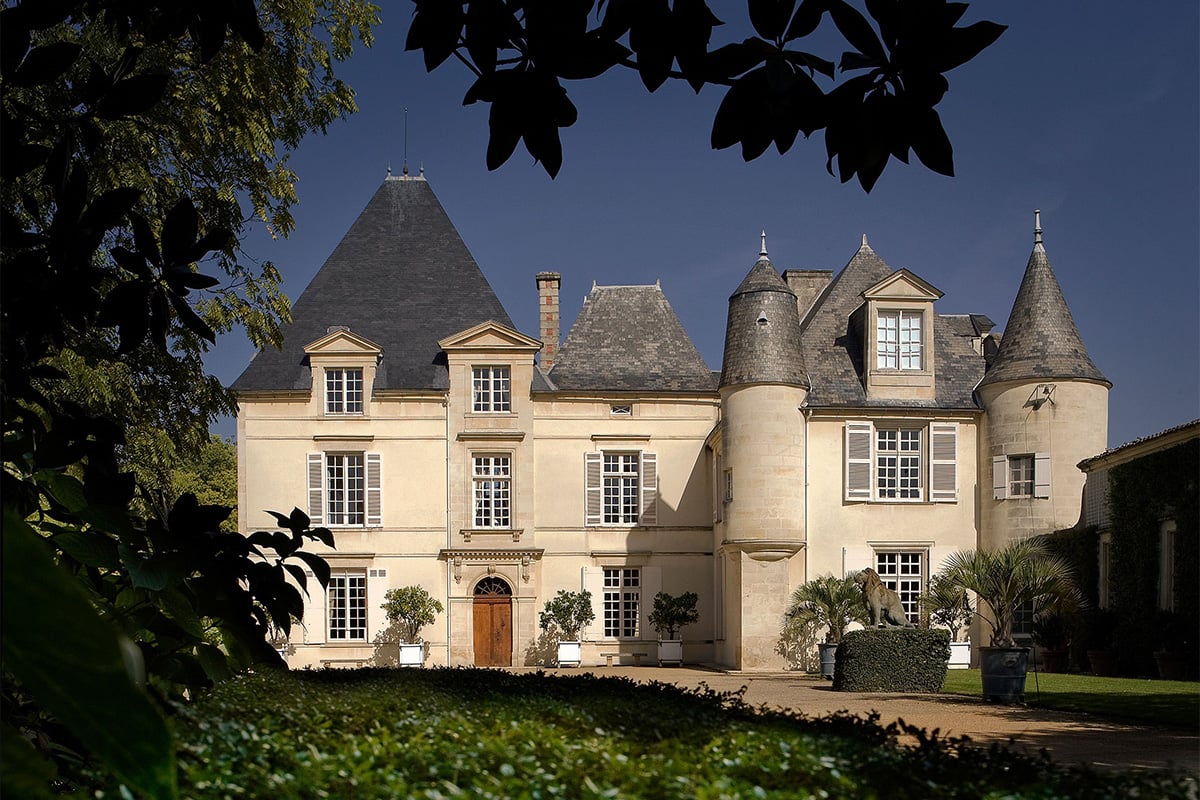
Château Haut-Brion: The Producer and History
"It is a subtle, elegant wine whose regal refinement at Haut-Brion has been renowned for centuries" Charles Curtis MW, Decanter
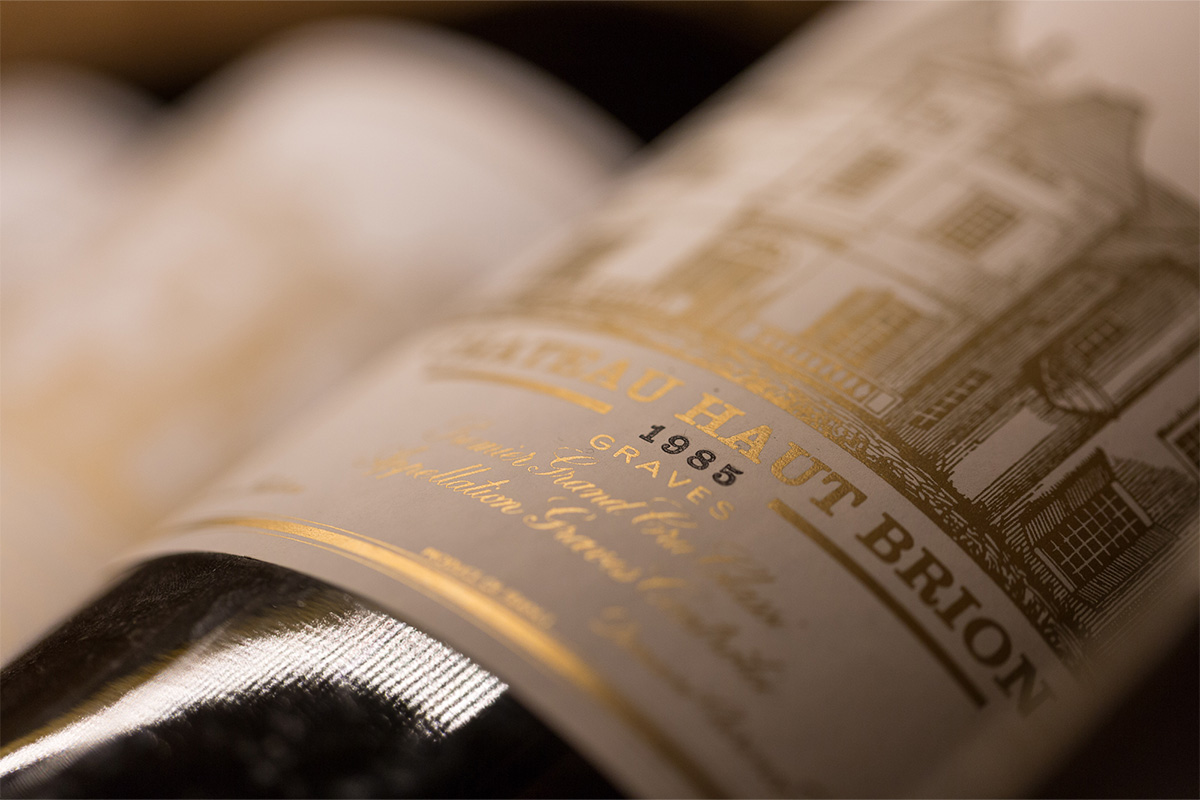
We have proof of vines at this site in Pessac-Léognan, just a few kilometres outside of the city of Bordeaux, back to 1426 - and it is likely that the Romans had planted here well before then. The name of the site is derived from Celtic term "briga" meaning a rise or mound, and in 1521 it was recorded as the Aubrion or Haulbrion Estate. This is immensely significant, as it was the first wine in France not to be named after a family or property, but after the location - later understood as terroir.
Under this distinctive name, Haut-Brion built a reputation for itself as a pioneer of 'New French Claret', made with a scientific approach to vinification, aimed at producing age-worthy, sophisticated wines from a specific origin. Before this, wines from the area were simply labelled as 'Bordeaux' or perhaps 'Graves'. In 1663, Samuel Pepys noted in his diary that he "drank a sort of French wine called Ho Bryan, that hath a good and most particular taste that I never met with", and a few years earlier the cellar book of King Charles II noted an order of 169 bottles of "Hobriono" for his own personal consumption. In fact, in 1666, the de Pontac family who owned the property opened Pontac's Head in London, a tavern where they could sell their wine, making them the first Bordeaux estate to promote their wine abroad.
The estate remained family owned until the Revolution, with notable proprietors including Arnaud de Pontac III, the first President of the Parlement of Bordeaux. For a time, the family owned both Haut-Brion and Margaux. Although the property was confiscated during the French Revolution, it was later restored to the family's ownership, who then sold to Talleyrand, then Napoleon's Foreign Minister. This estate changed hands many times over the coming years, but the quality of the wine endured, and in 1855 it was named as one of the four 'First Growths' in the classification of 1855, the only château outside of the Médoc to hold the title. In 1953, it was also proclaimed a Grand Cru Classe in the classification of Graves, making it the only Château to be classified twice.
The modern history of Haut-Brion begins in 1935, when it was purchased by the New York banker Clarence Dillon, and today it is run by grandson, Prince Robert of Luxembourg. This family's stewardship has done true justice to the château's incredible legacy, and propelled it to the very forefront of the world of fine wine. It remains iconic, particularly for the British: in 2025 it was the wine of choice for the state banquet held by King Charles III with President Macron.
Château Haut-Brion: The Vineyard and Terroir
"One of the greatest wine terroirs of the world." Robert Parker, Wine Advocate
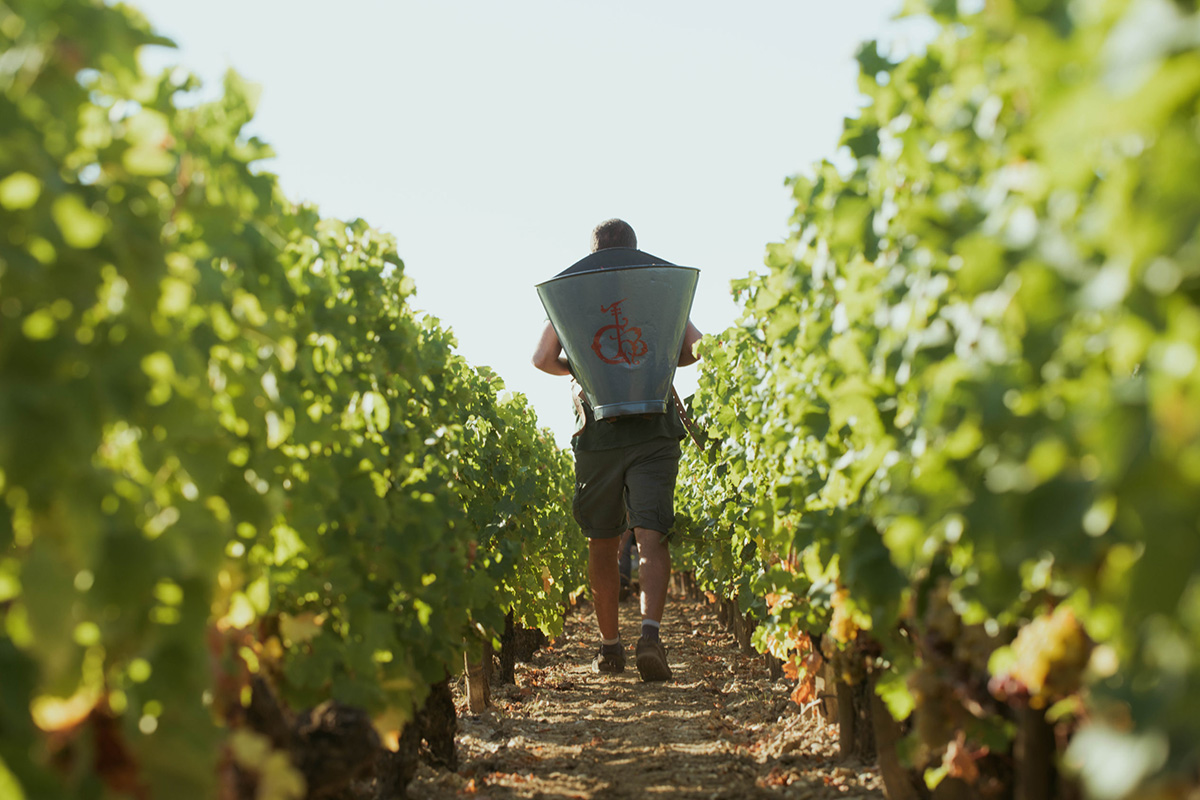
At 53 hectares, Haut-Brion is by far the smallest of the First Growths in Bordeaux. The vast majority are planted to traditional red grapes, with 42% Cabernet Sauvignon, 46% Merlot, 11% Cabernet Franc and 1% Petit Verdot. The gravel here is exceptionally deep, up to 18 metres, and sits over a mixture of clay, sand, and some limestone, with a high mineral content. The vines are around 35 years old, but some are close to a century of age. The château is keen to protect its unique plant material and maintains a 'mother vineyard' of the clonal material found at the property, replanting with sophisticated massale selection. Over the last 50 years, there has been a renewed focus on lowering yields to increase the wine's concentration and depth, with production of the Grand Vin reducing by over 60% 1982-2010.
Haut-Brion is also renowned for its white production, but production is tiny with just 2.9 hectares planted to white varieties: 62% Sémillon 48% Sauvignon Blanc, and a tiny amount of Sauvignon Gris. These are planted exclusively on clay subsoils, and at most 650 cases are produced.
Château Haut-Brion: Winemaking and Future Thinking
"The wine of Château Haut-Brion is in a class by itself. There is no other Bordeaux wine like it." Jeff Leve, The Wine Cellar Insider
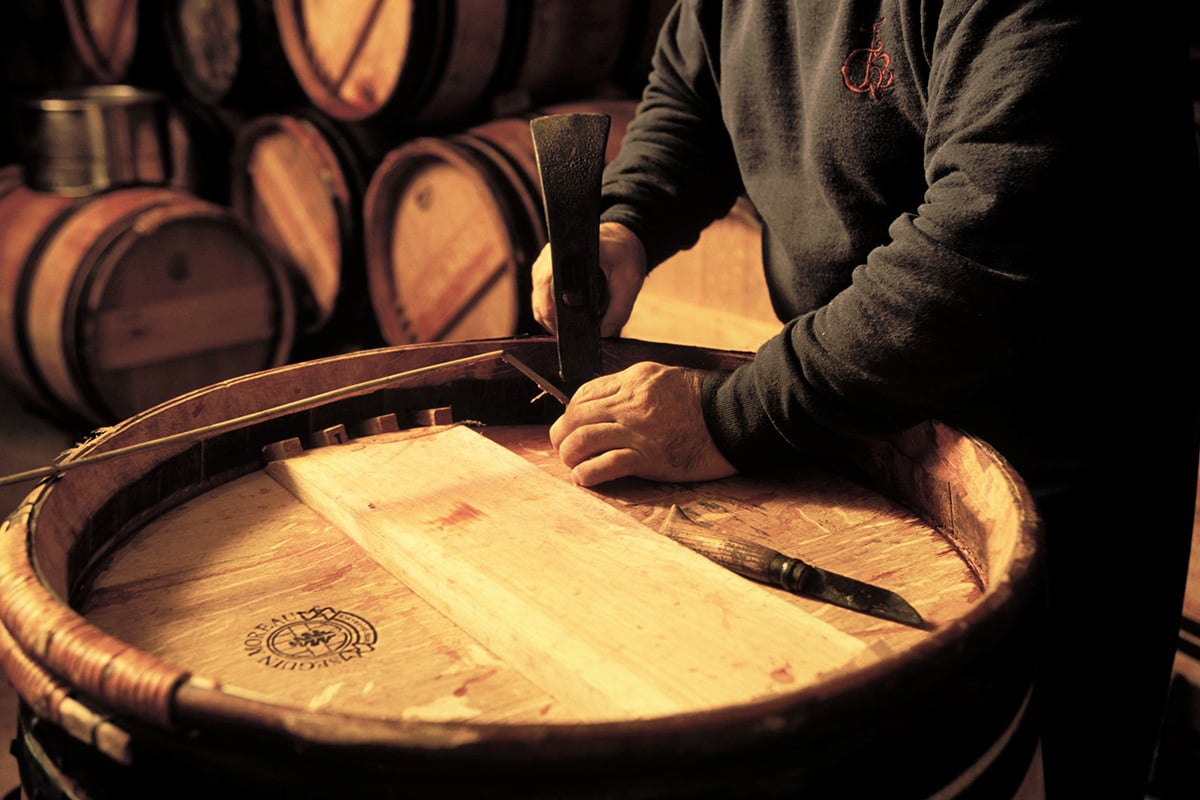
Haut-Brion pioneered many of the modern winemaking techniques used in Bordeaux. As the 'new French Claret', they were the first to mature wines for extended periods in oak barrels, the first to extract tannin with pumpovers, and the first to bottle their own wine to ensure quality. In the modern era, they were the first to use temperature-controlled stainless steel for vinification in 1961, and later introduced innovative double-skinned vats for greater thermal inertia. The red is matured in up to 100% new French oak barriques, most of which are made on-site by their own in-house cooper.
Many critics and experts praise the individuality of Haut Brion's style, particularly among the top echelon of Bordeaux's First Growths. The Grand Vin always shows an incredible purity of fruit, layered with an intense savoury umami often described as earthy spice. Above all however, these are wines of sensual elegance, restraint, and poise.
The rare Blanc is entirely unique, "without peer in quality, style and price" according to Jeff Leve of the Wine Cellar Insider. Whole-bunch pressed with no skin contact and fermented and matured in 100% new French oak, there is no malolactic conversion or lees stirring. The result is an electric, dense yet delicate white with a mineral spine, floral accents, and silky texture that is simply inimitable.
Château Haut-Brion: Spotlight On 1995
1995 Château Haut-Brion Premier Cru Classe, Pessac-Léognan
Haut-Brion, Bordeaux’s timeless anomaly dating back to 1525, has graced royal cellars and inspired critics for centuries. The 2005 vintage continues this legacy - a true masterpiece in a bottle.
100pts Lisa Perrotti-Brown TWI - The 2005 Haut-Brion is a blend of 56% Cabernet Sauvignon, 39% Merlot, and 5% Cabernet Franc. Deep garnet-brick in color, the nose explodes with heart-thumping floral and fragrant earth notes over a core of Morello cherries, black raspberries, and creme de cassis. It is medium to full-bodied, with super-firm, ripe tannins and a lively backbone lending a rock-solid structure to the bright, muscular fruit. The palate absolutely shimmers with stunning mineral and floral notes, finishing with epic length. Tantalizingly good now, expect even greater things with 5-10 more years of bottle age. It will cellar to 2070 and, most likely, well beyond. Bought by an American banker / financier Clarence Dillon in 1935, it remains in the family today, with Prince Robert of Luxembourg now managing the 125-acre estate on the edge of Bordeaux city, in the town of Pessac. The soils include some very deep gravels and a good amount of clay. Clonal variation adds to the complexity of the site, with over 500 different clones. Jean-Phillipe Delmas is the third generation in his family to oversee winemaking at this estate. The style is often more elegant, minerally, and refined than its flamboyant sibling La Mission Haut-Brion. Indeed, Haut-Brion can appear austere in its youth. July 20th 2022
100 points Robert Parker - The mineral-laced 2005 Haut Brion (56% Cabernet Sauvignon, 39% Merlot and 5% Cabernet Franc) is exquisite. With its elegance and finesse, it is not as powerful as La Mission, but the nobility and complexity of the aromatics, incredible fragrance (subtle smoke and blue, red, and black fruits) that persists in the glass, full-bodied mouthfeel (though very light and delicate on its feet), and incredible length characterize this great Haut-Brion. It is just starting to drink well, and should continue to do so for at least another three decades. It is a tour de force in winemaking, but only 9,000 cases were produced.
100 points Jane Anson - Amazingly young at 17 years old, barely at the stage of stretching its limbs, but everything is here and in place, crouched and ready. Rich in flavour, luscious black fruits that are full of life, this is an exceptional Haut-Brion, performing beautifully in a year where everything went right, but nothing was in excess. You get the full complexity of this site, with a myriad of dark fruits, plump berries, liquorice, pencil lead, mandarin peel and cocoa, you can comfortably cellar this for another few decades, but if you must open now, give it 6-8 hours in a carafe. Jean-Phillip Delmas winemaker, two years into his tenure at the time after taking over from his father Jean-Bernard Delmas in 2003. 100% new oak.
100 points Antonio Galloni - One of my wines of the night, the 2005 Haut-Brion is stratospheric. Remarkably vivid and nuanced, the 2005 presents a compelling mélange of dark flavours laced with the savory/mineral notes that are so typical of Haut-Brion. The 2005 is a thrill to follow in the glass, as it continually reveals new shades of its personality, something I consider a common attribute among all of the world's truly great wines. The dense, explosive finish points to a very bright future. Readers who own the 2005 should be thrilled, as it is truly magnificent.