
Tasting Notes and Scores
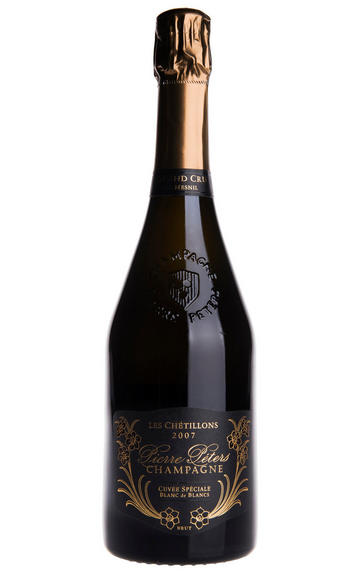
Peters' 2005 Brut Blanc de Blancs Cuvee Speciale Les Chetillons - based on parcels of old selection massale vines in a single lieu-dit - reflects a vintage that, as he puts it, "was on the limit of burnt (brulee) fruit." The nose here strikingly suggests sauteed mushrooms on toast, along with hints of citrus oils, Latakia tobacco, smoky black tea, and the salinity that happily, mouthwateringly infiltrates the palate. Nutty piquancy adds to the savor of a sustained and intriguingly fungal, smoky and toasty finish. I would be inclined to enjoy this over the coming year or two. It should reveal fascinating potential at table. Rodolphe Peters - who was just finishing an impressive cellar expansion when I visited him this June - has perpetuated a tradition at his family's house of letting all of their wines go through malo-lactic transformation, and they thus offer an especially vivid reminder that - regardless of what one hears from many a well-intentioned grower, not to mention wine critic - this transformation is entirely compatible with consistently achieving wines of vivid relief, refreshing acidity, and utmost clarity. (Not that anyone should really need reminding of this given the example of White Burgundy, and in particular of Chablis.) Interestingly, though, Peters has run a few recent experiments with very small non-malo lots. And speaking of what for him is also an experiment, there are now three Stockinger foudres in his cellar, informing a new "Oubliee" cuvee reviewed as part of this report. He associates quite specific characteristics with Chardonnay from each of the grand cru-rated villages whose vineyards he farms - Le Mesnil; Oger; Avize; and Cramant - and deploys them in blends, from 30-40 annual lots, with these traits in mind, not to mention with masterful results. (All but nine of his 47 acres are in the aforementioned communes: two are in Vertus; five in the Sezanne and two more represent un-utilized Pinot. I'll report in further detail next year on what Peters has to say about village terroirs as reflected in wine.) Especially in ripe vintages, Peters explains, "I'd rather harvest a bit larger crop and then be more selective of juice" retained from the press. One upshot of this approach is sometimes, with seeming paradox, to achieve slightly less natural alcohol in warmer and more obviously ripe years. In 2010, for example, Peters let fruit hang longer and ended up with higher must weight than in 2009, the sort of year in which he felt it important not to accentuate through higher alcohol the already ripe nature of the fruit. "It's important," he emphasizes, "to retain in the wine not just acidity and minerality, but also bitter elements of the right sort, in order to supply structure and balance the fruit." The non-vintage bottlings here always incorporate a significant measure - up to 40% - of reserve wine that has been accumulating for decades by holding back a portion of each year-s blend and adding it to a solera. Importers: Theise Estate Selections, imported by Michael Skurnik Wines, Inc., Syosset, NY; tel. (516) 677-9300
David Schildknecht
Wine Advocate
2013-11-30
Champagne
View 6 pack case(s) available.

Champagne
View 6 pack case(s) available.
Champagne
View 3 pack case(s) available.
Champagne
View 6 pack case(s) available.

Pricing includes duty and VAT.
Want To
get In TouchPlease contact the LiveTrade team today for more information or to book a demo.
Contact us