
Tasting Notes and Scores
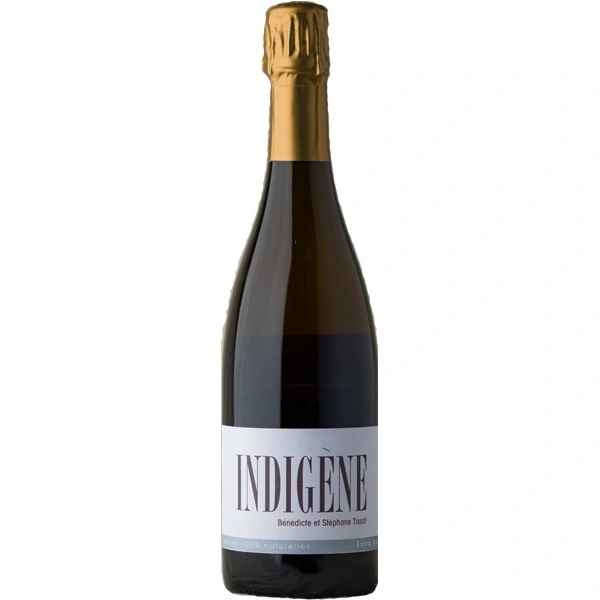
The sparkling 2019 Crémant du Jura Indigène is a zero dósage blend of mostly 2019 (but with a significant percentage of 2018) and is my favorite sparkling wine from Jura. They use no external yeasts for any of the fermentations; the one in bottle was produced adding unfermented vin de paille (sweet) and vin de paille in fermentation (yeasts), which makes it expensive to make. This year, they seem to have gone one step beyond, and the wine reminded me more than ever of the wines from Selosse, aging it in barrique, appley and complex.
Wine Advocate
The same wine as the regular Crémant, the NV Crémant du Jura Indigéne L13, carries no vintage information on the label. This is a unique and unusual wine: Vin de Paille is used as the starter for the fermentation which is very long, six to seven months, as he’s using more and more of his own yeasts for the sparkling wines; because he feels if everybody used the same yeasts from Champagne, the wines would be very similar. He also uses Vin de Paille for liqueur de tirage for the second fermentation in bottle, and the wine ends totally dry. So he estimated that he has around two euros worth of Vin de Paille in each bottle of Indigéne. The long fermentation gives the wine a different creamy character -- a texture rather than a flavor -- and the wine has a lot more complexity and depth, a little more like the petillant naturel in taste. There is great acidity and good integration of the carbonic. The bottle we tasted and the current release is from 2013. He feels Crémant is good when young (18 months) or very old, 5-6 years. From the end of 2015, he will start putting the disgorgement date on the back label. 10,000 bottles produced.
Luis Gutiérrez
Wine Advocate
2015-10-30
Tissot’s vintage 2008-based non-vintage Cremant du Jura Brut Indigene L09 represents the latest in a series about whose inaugural installment I raved in Issue 184, whereby neither sugar nor commercial yeasts are utilized for either the primary or secondary fermentations; the latter is induced by the addition of a sweet wine; and the wine’s low finished residual sugar is that which remained from its secondary fermentation. The initial blend was identical to that of the corresponding “regular” Brut, having for the first time on this occasion included small amounts of Poulsard and Trousseau with the usual Chardonnay and Pinot Noir. Once again, we are presented with a refined performance in which fresh red currant and black raspberry; toasted grains; and subtle citrus are tinged with nutmeg, chalk, and salt, and a succulent, velvety yet finely-pearling palate impression leads to a mouthwateringly savory finish that goes dramatically – and given their nearly identical raw material, surprisingly – far beyond what’s offered by the corresponding basic brut. Enjoy this excellent value over the next couple of years. Stephane Tissot has become the best-known face of his region internationally (exports are now up to half of production), and in their combination of clarity and immediate appeal with intrigue, it would be hard to find either a person or wines more suited to that role. The line-up at his estate varies in labeling according to legal technicalities with which I have sought not to burden readers. Some labels indicate the names of Stephane and his wife Benedicte; most still bear those of his parents, Andre and Mireille; and all now include the prominent legend “vinifie par Stephane Tissot.” (The negociant joint-project known and labeled as Cave de la Reine Jeanne is briefly explained under my notes on its three wines.) Restraint with sulfur has long been a characteristic at this address, and both the increasing fashion for low-sulfur and Tissot’s growing confidence as a vintner have no doubt been factors in his increasingly utilizing no sulfur until bottling and then only a few grams, as well as his experimentation with certain entirely sulfur-free cuvees. Tissot is understandably delighted with his young 2010s, but only slightly less enamored with the 2009s. The latter, he says, push and occasionally exceed 14% alcohol – a circumstance he prefers to avoid – but escape any over-ripeness of flavor such as he found (and I can confirm) in many 2005s. Among the especially noteworthy sites recently developed by Tissot is his Clos de la Tour de Curon, situated right below the eponymous tower once reputed to mark the best site in the commune of Arbois. The vines – based on old selections massales, and just coming up on ten years – are trained to single posts; densely planted to resemble a Mosel or Cote Rotie slope; and reduced to just 2-3 clusters each. A mere four and a half barriques resulted in 2010; but that wine – like a strikingly floral, similarly promising Les Mailloche, from 50-year-old vines in Arbois, which was not even finished fermenting when I tasted it last November – could not yet be commented-on in detail or rated for this report. And speaking of slow fermentations, last November the 2009 Les Graviers still had sugar left to (hopefully!) digest. Tissot’s Chardonnay plantings favor selections massale and the local melon a queue rouge variant rather than latter-day Burgundian clones; the selection planted at the Tour de Curon representing in his words “all the variants of Chardonnay you can have in the Jura, including 4% ‘Chardonnay Musque.’” Tissot’s acquisition of a small parcel of Chateau Chalon dates to 2007, but that means three more years before this exciting news leads to the first fruits in bottle; meantime, his Cotes du Jura Sursis reflects (and is named for) the share of the aforementioned parcel that was planted in Chardonnay which Tissot – in complete disregard of the bottom line, given that the Jura’s most prestigious appellation is Savagnin-only – elected to spare. Having had chance on the occasion of my November visit to taste a significant number of back vintages, I have included notes on most of these in the present report. I only regret in retrospect that I had not asked Tissot in advance to show me a full range of his 2008 Chardonnays; but he had not pulled any of them for me until I requested, and most of his 2008s were in a cellar that we could not take time to access given that we had tarried in his vineyards, not to mention tasted his complete current releases. A Thomas Calder Selection Paris (various importers); fax 011-33-1-46-45-15-29, also imported by Frederick Wildman & Sons, New York, NY; tel. (212) 355-0700
David Schildknecht
Wine Advocate
2012-06-30

Bordeaux
View loose bottle(s) and 3/6/12 pack case(s) available.
Bordeaux
View 3/6/12 pack case(s) available.

Rhone
View 12 pack case(s) available.

Bordeaux
View loose bottle(s) and 6 pack case(s) available.

Pricing includes duty and VAT.
Want To
get In TouchPlease contact the LiveTrade team today for more information or to book a demo.
Contact us